You don’t survive in this business by being lucky. You survive by being patient, by treating the interface like a control panel, and by knowing that the house doesn’t have a heart, but it does have blind spots. I’ve been doing this for six years now—no other job, just this. Rent, food, the new tires on my car—all of it came from understanding that a slot machine is just a math problem wrapped in flashing lights. My morning routine is simple: coffee, silence, and the mechanical process of
Vavada account login. If you’re not treating that moment like a shift supervisor clocking in, you’re already a tourist. And tourists lose.
I remember the first time I cracked a grand out of a single session. It was a Tuesday. Dead time. The kind of hour when most people are at work worrying about their bosses while I’m staring at a screen, tracking the volatility of a new Hacksaw release. I’d been testing the waters for three days on that particular engine. I wasn’t playing to feel something; I was playing to see if the algorithm was “loose” after a specific number of dead spins. That’s the secret they don’t tell you. You don’t chase the win. You wait for the machine to pay its statistical debt.
That Tuesday started like any other. I pulled up the site, did the Vavada account login, and checked my balance. I keep separate wallets for different strategies. One for “grind”—low volatility, high volume, slow bleed. Another for “hunting”—high volatility, high stakes, waiting for the avalanche. I had about $1,200 in the hunting wallet. I told myself I’d walk if it dipped below $800. No emotion, just numbers.
The first hour was brutal. It always is. People think professionals don’t feel the sting of losing, but we do. We just don’t react to it. I watched the balance drip from $1,200 to $950 on a game called Rip City. Zero bonuses. Just dead spin after dead spin. My jaw was tight, and I could feel that familiar pressure behind my eyes—the one that tells amateurs to double their bets to “win it back.” I ignored it. I dropped my bet size by 20% to survive the dry spell.
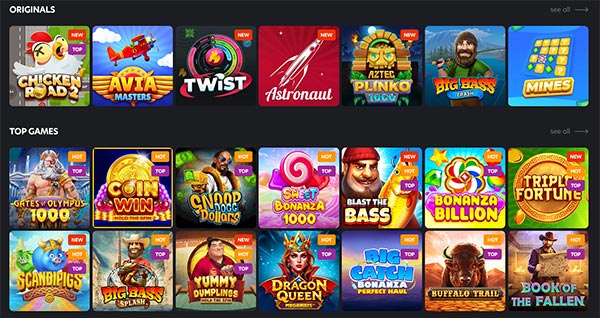
Then, at 11:14 AM, something shifted. I switched to a game I’d been monitoring for a week—Money Train 3. It’s a brutal slot. It can eat your bankroll alive for hours, but when it hits, it hits like a truck. I started seeing the patterns. A few medium wins every 47 spins, a slight dip in the bonus trigger frequency. The math suggested the RNG was cycling toward a high-payout phase. This is where most people get scared and lower their bets. I did the opposite. I cranked the bet to $20 per spin.
I hit the bonus on the fourth spin after that. But it wasn’t just a bonus. It was the bonus. The respin feature with persistent symbols. I watched the multipliers stack. A 10x, a 20x, then a 100x landed on the last reel. My heart didn’t race. When you do this for a living, you train your heart to stay flat. But my fingers were moving fast, screenshotting the screen, tracking the progression on a notepad. When the round ended, the total was $8,400. Just like that. A number on a screen.
I didn’t cash out immediately. That’s the mark of a professional. You don’t celebrate until the money is in your withdrawal history. I rode the high of that win by switching back to the grind wallet. I played Starburst for ten minutes at minimum bet just to let the system register the activity as “normal user behavior.” It sounds paranoid, but when you’re making consistent money, you learn to look human to the automated security flags. After those ten minutes, I navigated back to the cashier, processed the withdrawal, and sat back.
The relief was physical. My shoulders dropped about two inches. I made another Vavada account login on my phone just to double-check that the withdrawal request had gone through. It had. Pending status, but locked in. That moment—when the money is in the ether between your account and your bank—is the most peaceful moment of my week. No risk, just the quiet satisfaction of a job done right.
I’ve had sessions where I grind for 14 hours and end up down $200. I treat those like bad shifts at a normal job. You shake it off, review your logs, and figure out where you misread the volatility. But days like that Tuesday? They’re why I can do this full-time. It’s not about the dopamine hit. I don’t play for the “jackpot thrill.” I play because I understand the architecture of the system better than the average person, and the system pays for my life.
Later that night, I went out to a steakhouse with a friend who works a 9-to-5. He asked me if I ever get scared when I put that kind of money on the line. I told him no. Fear is for people who don’t have a plan. When you do your Vavada account login every morning with the same discipline as a welder putting on his helmet, it stops being gambling. It becomes extraction. The house has the edge in the long run, sure. But in the short run? In the specific window where you’ve done your homework and you’re playing the right game at the right time? That’s where we live.
The money cleared the next afternoon. I left $500 in the account for the next grind cycle, transferred the rest, and closed the laptop. No fanfare. Just another Tuesday. But I’ll tell you, driving past the casino district in my city and knowing I pulled a month’s salary out of a browser tab while drinking cold coffee? That feeling doesn’t get old. It’s not about luck. It’s about showing up every day, doing the math, and treating the login screen like a clock-in. You either respect the process, or the process respects your wallet by emptying it. I choose to be the one holding the receipt.
 Přihlásit se
 Registrovat
 FAQ
FAQ Hledat